


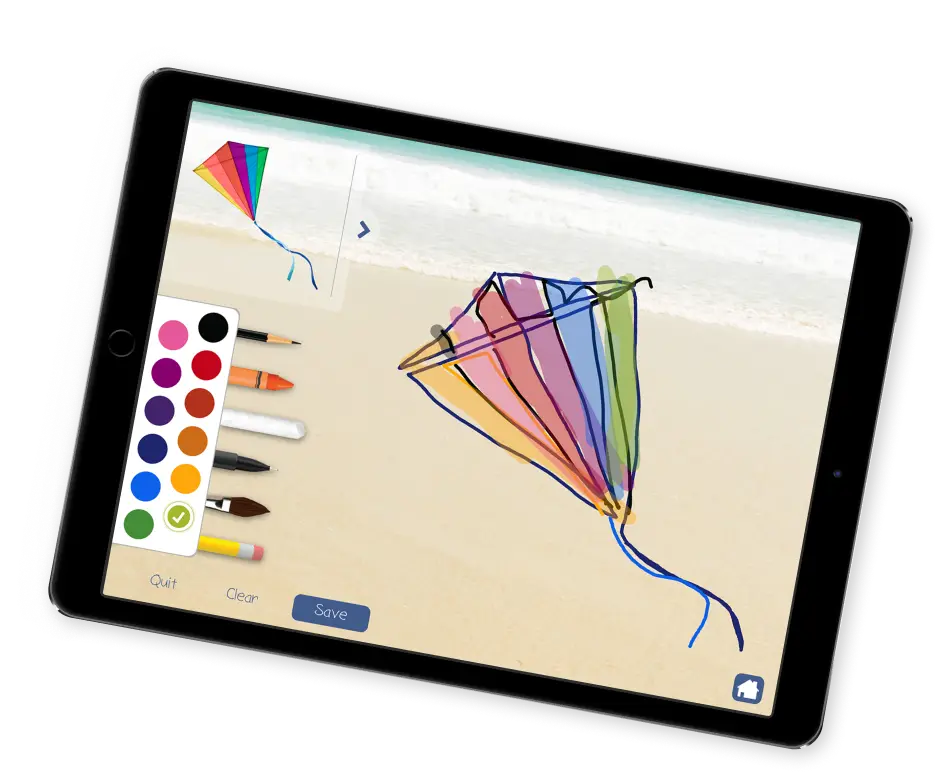
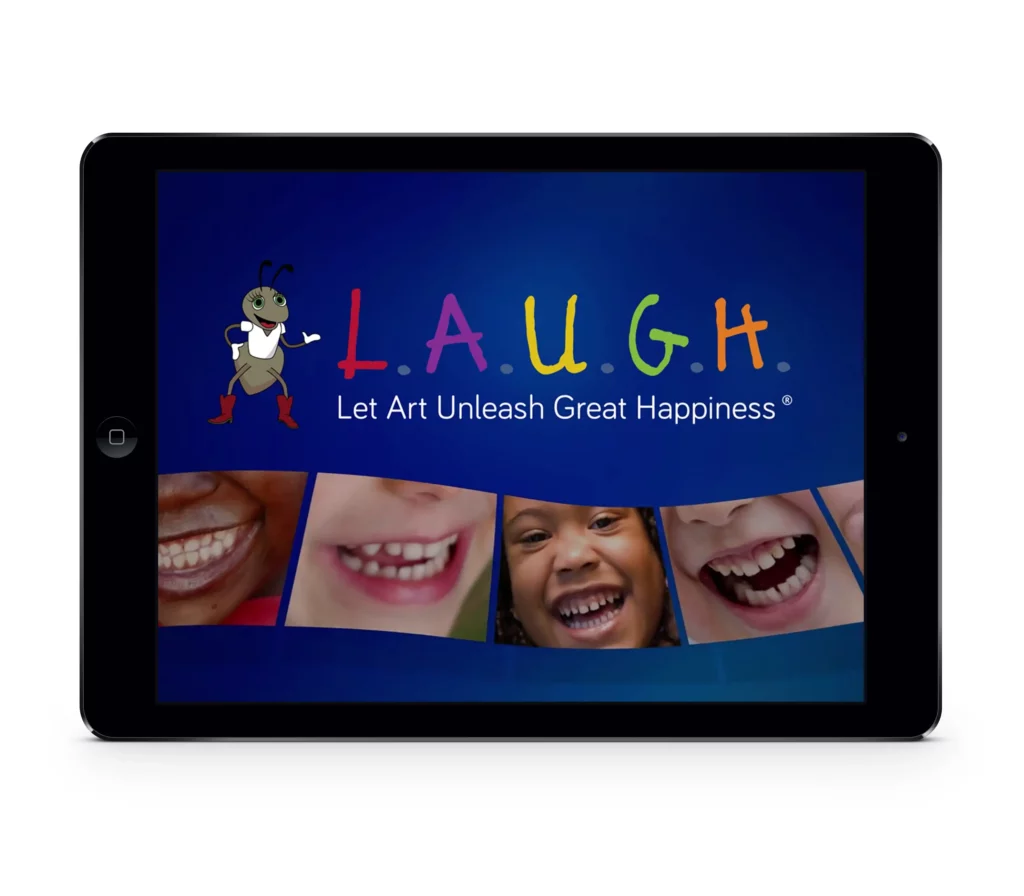
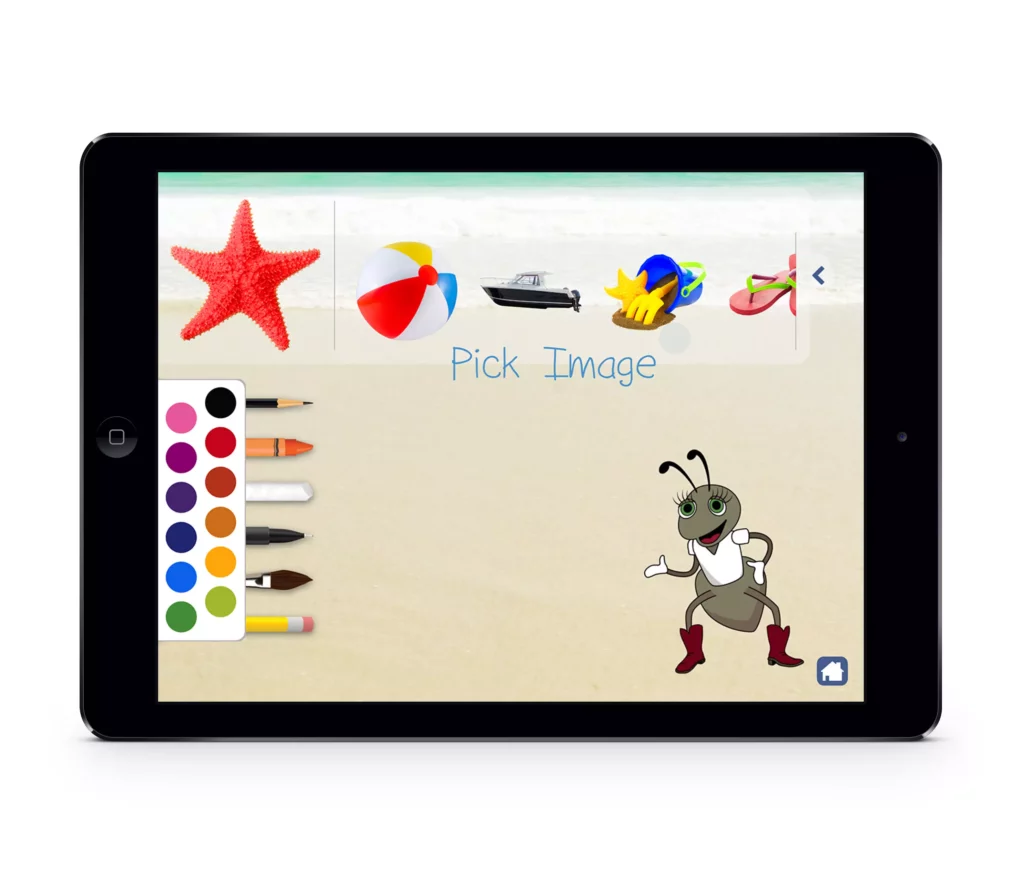
The Catherine Mayer Foundation, led by internationally‑recognized visual artist Catherine Mayer, saw the mounting challenge: children today spend on average 5–7 hours a day on screens, with studies showing that this level of entertainment‑media use correlates with feelings of anxiety and disconnection. As digital devices become ever‑present, Mayer envisioned a different path: to harness technology to bring calm, creative engagement and self‑expression rather than passive consumption. Her vision became the L.A.U.G.H. App (“Let Art Unleash Great Happiness®”)—an iPad‑based experience combining visual arts, music, movement and breathing exercises to create calming, positive energy for kids.
The L.A.U.G.H. App
Transforming Screen Time into Mindful Creativity
Background
Challenges
But the journey wasn’t straightforward. Nine months into development with a previous agency, the project began to drift: the deliverable was not fulfilling Mayer’s artistic vision, and the original team’s technical and UX capabilities were being tested. At that point, Mayer approached UpTop to step in. The challenge was two‑fold: (1) Deliver a fully functioning app that precisely aligned with Mayer’s aesthetic and experiential vision, and (2) Prepare the product for rigorous clinical studies at the Seattle Children’s Research Institute—so the app could present credible evidence of its effectiveness—and develop a product strategy/roadmap for future enhancements.
Partnership Info
client
The Catherine Mayer Foundation
Industry
Non-Profit Arts & Cultural
type
iPad App (iOS)
services
User Research, UX Design, Mobile App Development
Partnership Info
client
The Catherine Mayer Foundation
Industry
Non-Profit Arts & Cultural
type
iPad App (iOS)
services
User Research, UX Design, Mobile App Development
Background
The Catherine Mayer Foundation, led by internationally‑recognized visual artist Catherine Mayer, saw the mounting challenge: children today spend on average 5–7 hours a day on screens, with studies showing that this level of entertainment‑media use correlates with feelings of anxiety and disconnection. As digital devices become ever‑present, Mayer envisioned a different path: to harness technology to bring calm, creative engagement and self‑expression rather than passive consumption. Her vision became the L.A.U.G.H. App (“Let Art Unleash Great Happiness®”)—an iPad‑based experience combining visual arts, music, movement and breathing exercises to create calming, positive energy for kids.
Challenges
But the journey wasn’t straightforward. Nine months into development with a previous agency, the project began to drift: the deliverable was not fulfilling Mayer’s artistic vision, and the original team’s technical and UX capabilities were being tested. At that point, Mayer approached UpTop to step in. The challenge was two‑fold: (1) Deliver a fully functioning app that precisely aligned with Mayer’s aesthetic and experiential vision, and (2) Prepare the product for rigorous clinical studies at the Seattle Children’s Research Institute—so the app could present credible evidence of its effectiveness—and develop a product strategy/roadmap for future enhancements.
“I approached UpTop because of their expertise in user-centered design and development, but also because of my prior working relationship with their UX Manager, Michael Woo,” said Mayer. “I knew that the synergy of this partnership would make communicating much easier and allow for more creative moments to happen.”– Catherine Mayer, Founder
Approach
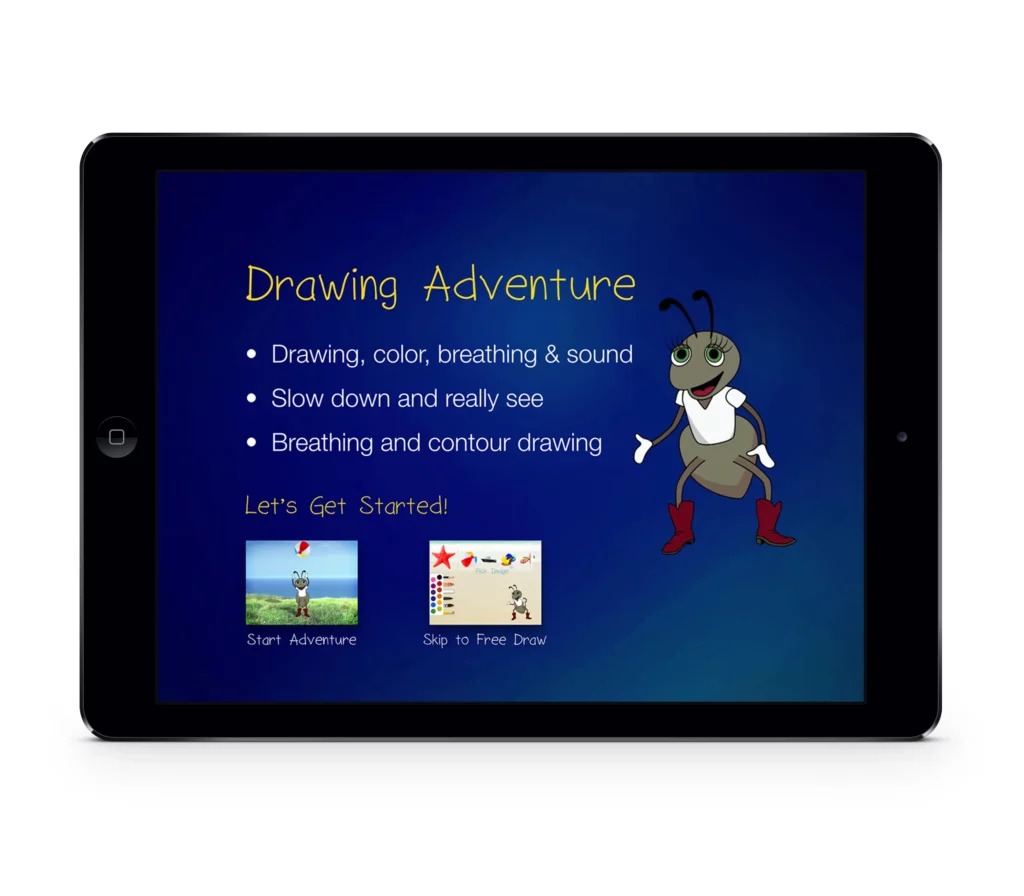
At UpTop we began by immersing ourselves in Mayer’s creative world: as an artist whose primary medium was not technology, she knew what she wanted the experience to feel like, but translating that into an app was challenging. We stepped into her mindset, clarified and articulated the vision, and mapped out the core components of the app:
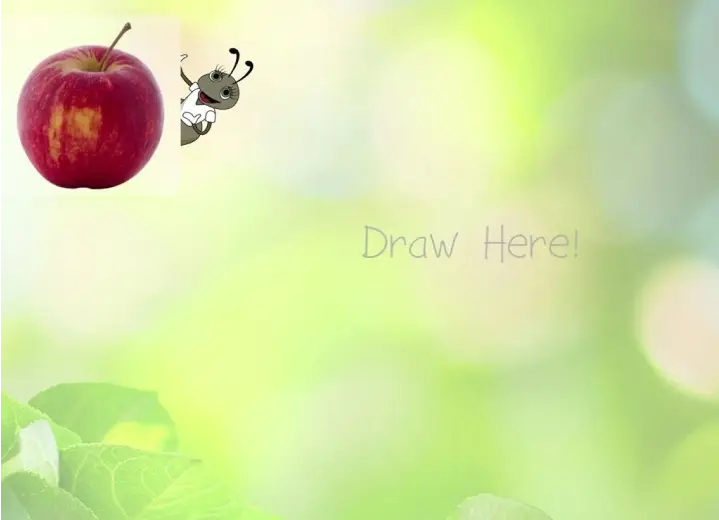
Guided Path: Users follow a protagonist, Ambi Ant®, through a mindfulness‑journey experience.
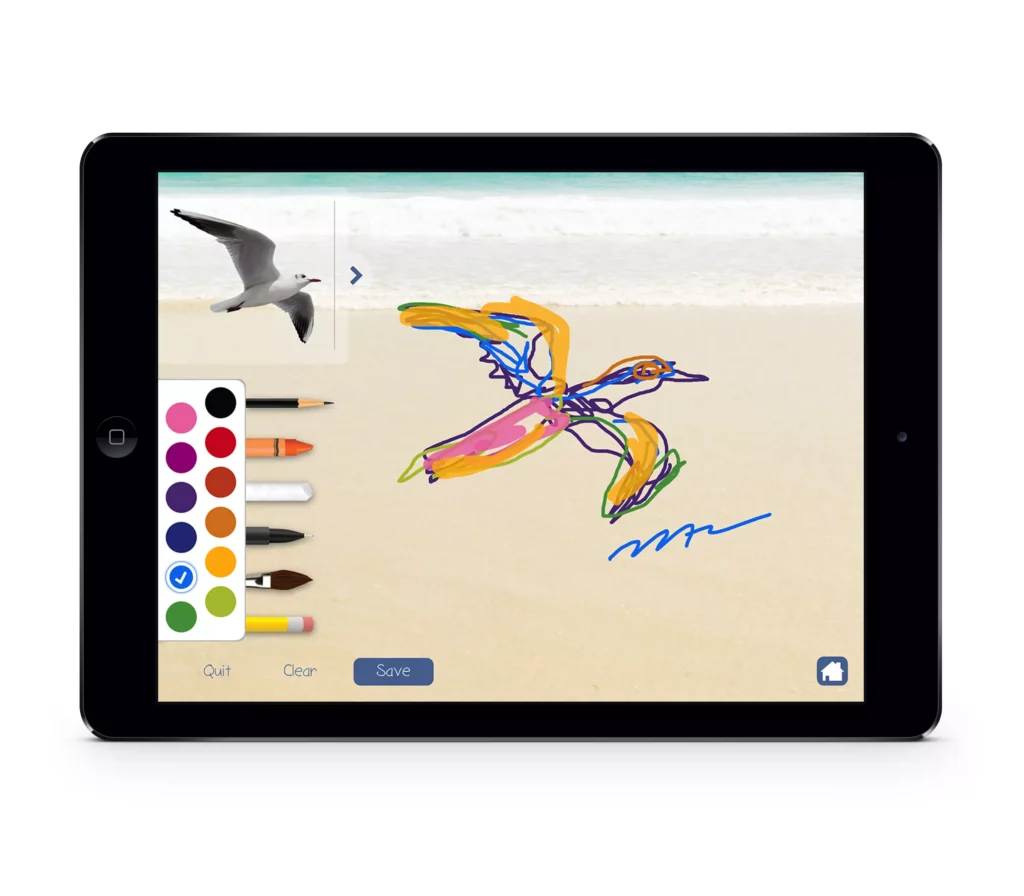
Interactive Exercises: Free‑flowing creative expression to generate positive energies.
Breathing Exercises: Biometrically‑tailored breathing to calm and focus.
Multisensory Experience: Carefully orchestrated visuals, movement, music and sound tuned to psychological triggers for maintaining a mindfulness state.
Interactive Exercises: Free‑flowing creative expression to generate positive energies.
Breathing Exercises: Biometrically‑tailored breathing to calm and focus.
Multisensory Experience: Carefully orchestrated visuals, movement, music and sound tuned to psychological triggers for maintaining a mindfulness state.
We inherited the existing assets and codebase. First, we performed a thorough audit of all assets—images, audio, video, code, and script. In parallel, we built a screen‑interaction map with recommended changes for the two A/B test variants already in flight, with the goal of optimizing both flows ahead of the clinical study. Next, we created a high‑fidelity prototype (using Keynote) to simulate the app experience for the research partner without costly code overhead. Given the research stakes, our team completed the required Human Subjects Training Course because our role involved preparing the test app and observing participants.
Meanwhile, we revisited the UI direction for Ambi Ant®. The original 3D character lacked scalability and did not resonate as strongly with the target audience. We recommended shifting to 2D, explored mood boards and sketches, and conducted guerilla testing with children comparing versions. Once a clear winner emerged, we animated the keyframes for Ambi. As the study progressed, we used the R.I.T.E. (Rapid Iterative Testing & Evaluation) method to iterate on observed usability and engagement feedback, prototyping in InVision and then pushing new builds. Finally, our design team facilitated a “How Might We…” brainstorm session to envision future possibilities for the app, grouped ideas by impact vs. effort, mapped them into a roadmap, and even captured potential technology ideas for patent consideration.
Meanwhile, we revisited the UI direction for Ambi Ant®. The original 3D character lacked scalability and did not resonate as strongly with the target audience. We recommended shifting to 2D, explored mood boards and sketches, and conducted guerilla testing with children comparing versions. Once a clear winner emerged, we animated the keyframes for Ambi. As the study progressed, we used the R.I.T.E. (Rapid Iterative Testing & Evaluation) method to iterate on observed usability and engagement feedback, prototyping in InVision and then pushing new builds. Finally, our design team facilitated a “How Might We…” brainstorm session to envision future possibilities for the app, grouped ideas by impact vs. effort, mapped them into a roadmap, and even captured potential technology ideas for patent consideration.
Solution
The UpTop team took over and refined the product: optimized flows, re‑designed core interaction, updated character and UI visuals, produced the working build aligned with the artist’s vision, and delivered the product strategy and roadmap for future phases. We supported the app’s release (March 2017) on iPad and worked with The Catherine Mayer Foundation on the PR blitz and additional post‑launch testing with partners such as a Montessori classroom, the University of Washington research program and Kindering.
Results & Impact
The L.A.U.G.H. App—now available via The Catherine Mayer Foundation—has been validated through evidence‑based research: in a pilot program at Madrona Elementary School in partnership with the University of Washington College of Education, children using the app exhibited an 18.7 % improvement in “joy of learning” and a 19.2 % increase in “school connectedness.”
Further, users demonstrated greater concentration than when using comparable entertainment apps. The project underscores how a strategic blend of artistic vision, user‑centred design and rigorous research can turn screen time into an opportunity for mindful creativity, self‑expression and wellbeing.
Further, users demonstrated greater concentration than when using comparable entertainment apps. The project underscores how a strategic blend of artistic vision, user‑centred design and rigorous research can turn screen time into an opportunity for mindful creativity, self‑expression and wellbeing.
Related Case Studies
Related Case Studies
Let’s Build What’s Next. Together.
From creating innovative new products to elevating existing experiences, UpTop is ready to help you make it happen.